Noise guide · 7 min read
Fridge Freezer Making Noise? Which Sounds Are Normal and Which Mean a Fault
Fridge freezer making noise? Learn which hums, clicks and pops are normal on a Sub-Zero built-in and which grinding, buzzing or clicking sounds mean a fault.
A fridge freezer making noise is usually just working: a steady compressor hum, a soft whoosh from the fans, and pops, gurgles or a light sizzle during a 20 to 40 minute defrost are all normal sounds. The noises that point to a fault are grinding or ticking from a fan blade striking ice, a continuous buzz from the ice maker water valve, and a compressor that clicks every few minutes without starting.
This guide is for owners of built-in, panel-ready refrigeration such as Sub-Zero, where the machinery sits behind a grille and every sound travels through the cabinetry. The same logic applies to built-in Viking, Thermador and Monogram columns.
What sounds does a healthy Sub-Zero refrigerator freezer make?
A Sub-Zero compressor produces a low, even hum, and newer variable-speed Sub-Zero compressors run for long stretches at low speed, so near-constant running is normal. The evaporator and condenser fans add a soft rush of air that grows louder after door openings or a warm grocery load.
Refrigerant moving through the Sub-Zero sealed system gurgles or trickles, especially as the compressor starts or stops. Liners and evaporator coils crack and pop as they expand and contract, and during each automatic defrost, water dripping onto the warm heater can sizzle for several minutes.
Sub-Zero controls and relays also click as they switch the compressor, fans and defrost heater, and an ice maker adds a brief fill buzz and the clatter of falling cubes.
Why is the freezer making a loud grinding or ticking noise?
The most common fault sound in a Sub-Zero freezer is a fan blade hitting ice. When the evaporator coil frosts over, ice grows into the fan shroud and the blade ticks, scrapes or grinds. That much frost usually means the automatic defrost is failing or a worn door gasket is letting humid air in.
A Sub-Zero evaporator fan motor with worn bearings chirps or squeals instead, and a condenser fan with debris in the blade rattles near the grille. On many refrigerators, opening the freezer door pauses the evaporator fan, so a noise that stops when the door opens points at that fan.
A manual defrost tests an iced Sub-Zero freezer fan: move the food to coolers, switch the unit off, and leave the doors open for about 24 hours. If the grinding returns as frost rebuilds, the defrost heater, sensor or control needs a technician.
Is a buzzing or humming noise from the ice maker normal?
A short buzz from the Sub-Zero ice maker water valve is normal: the solenoid opens for a few seconds to fill the mold, then shuts. A buzz that keeps going usually means the valve is filling against a closed supply, a kinked line or a clogged filter. Sub-Zero advises switching the ice maker off whenever the household water is shut off, since a dry valve buzzes and wears.
Hard foothill water adds a second Sub-Zero ice maker sound: mineral scale narrows the valve screen, so the valve chatters or whistles. A bang in the wall as the valve closes is plumbing water hammer, not a refrigerator fault.
To test the Sub-Zero ice maker, switch it off for a full day. If the noise disappears, the ice maker, valve or water line is the source.
How do you tell compressor noise from fan and cabinet noise?
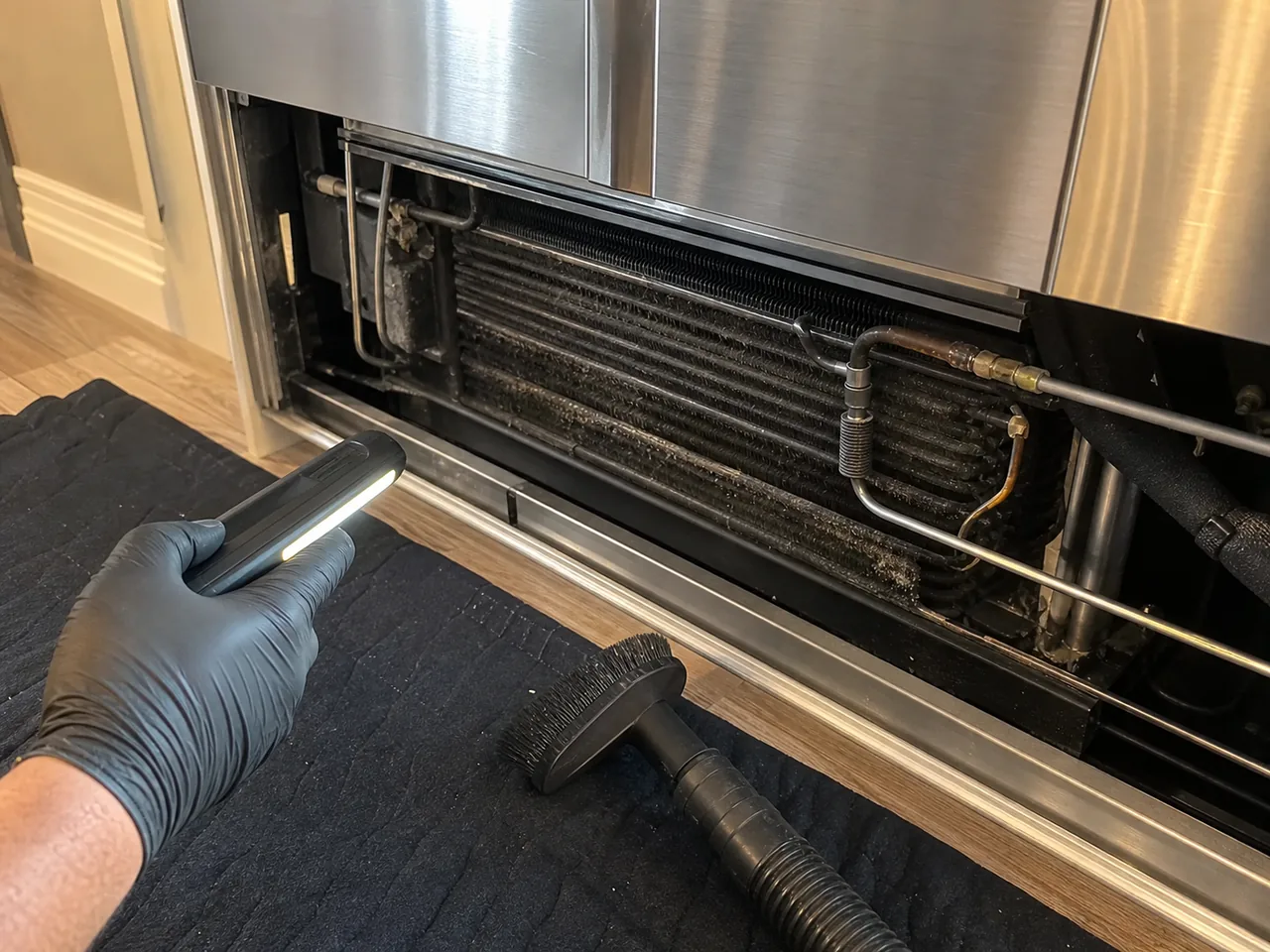
Location is the fastest clue on a built-in Sub-Zero. On classic built-in models the compressor and condenser fan sit behind the top grille; on integrated columns and undercounter units the machinery is at the bottom behind the toe-kick. Sounds inside the freezer compartment belong to the evaporator fan, the defrost system or the ice maker.
A Sub-Zero compressor that clicks, buzzes for a few seconds, goes quiet and repeats every few minutes is failing to start, whether from a start relay, an overload or compressor wear, and the freezer will warm. A loud knock when the compressor stops can mean worn mounts. Both need a technician.
Rattles often come from the Sub-Zero cabinet itself:a loose grille screw, a shifted drain pan, a custom panel touching its neighbor, a unit out of level, or a bottle stored on top. Tightening and leveling fix these without parts.
Safe Checks Before You Book a Technician
Four owner checks cover most Sub-Zero noise complaints without opening anything sealed:
1. Put an appliance thermometer in each section. The recommended Sub-Zero settings are 38°F in the refrigerator and 0°F in the freezer, and a noise with steady temperatures is rarely urgent. 2. Close both doors fully and check the gaskets for gaps or frost on the seal. 3. Tighten loose grille screws and clear items stored on or against the unit. 4. With power off at the breaker, vacuum the condenser coil with a soft brush attachment. Sub-Zero recommends this every 6 months, and dry-season dust and fire-season ash clog it sooner, making the fans and compressor run louder.
Note when the Sub-Zero noise happens and how long it lasts; a short phone video close to the source helps a technician too.
When should a noisy Sub-Zero get a professional diagnosis?
A Sub-Zero noise needs a technician when it comes with rising temperatures, when frost returns after a manual defrost, when the compressor clicks without starting, or when there is a burning smell or a tripping breaker. Fans, valves and defrost parts are moderate repairs; compressor and sealed-system work is the expensive end and should only be quoted after testing.
In Blackhawk, with six gated foothill communities and long private drives, a Sub-Zero visit goes faster when gate access is arranged and the model and serial numbers from the rating plate are ready. Share the noise video and thermometer readings, so the technician arrives with the likely parts.
· FAQ
Questions & answers
Why is my freezer making a loud noise after a power outage?
A Sub-Zero runs its compressor and fans hard for several hours after an outage or PSPS shutoff to pull the freezer to 0°F, so loud steady running is normal. Repeated clicking without the compressor starting is not; switch the unit off and book a diagnosis.
Is it normal for a Sub-Zero refrigerator to run almost constantly?
Yes, on newer Sub-Zero models with variable-speed compressors, which run long at low speed. Constant running is only a concern when the sections drift above 38°F and 0°F or the condenser coil is clogged.
Can I keep using a freezer that is making a weird noise?
Usually, yes, as long as an appliance thermometer shows the freezer holding near 0°F. If the temperature climbs or the noise turns to grinding, move the food and have the Sub-Zero checked.
Does a noisy condenser fan mean the refrigerator needs a new compressor?
No. A noisy condenser fan usually has a dirty blade, debris or a worn motor, a far smaller repair than a compressor. Cleaning the Sub-Zero condenser coil every 6 months keeps the fan and compressor running quieter. Danville Sub-Zero Repair handles this locally — call (925) 940-3576.
Go deeper
More Danville guides
How to Choose a Sub-Zero Repair Service in Danville and Blackhawk
Vetting a Sub-Zero repair company in Danville: gate clearance for Blackhawk, hillside and panel-ready access, and whether one company can cover the Wolf too.
Read the guide → Undercounter units · 6 minSub-Zero Undercounter & Beverage Drawer Care: Danville Myths vs. Reality
Why Sub-Zero undercounter and beverage drawers in Danville ice over, run warm, or won't close — the myths, the real fixes, Type I rules, and what service costs.
Read the guide → Wolf Burner Ignition · 5 minWolf Burner Won't Light in Danville? The Five Causes, Ranked by Likelihood and Cost
A Wolf burner that clicks without lighting has one of five root causes. Here is each one ranked by likelihood, with the honest Danville price band for the fix.
Read the guide →Rather leave it to a specialist?
Have the failing compartment and model number ready, and you will get a real first opinion — not a sales pitch.
| Normal defrost sounds | Pops, gurgles and sizzles during a 20 to 40 minute defrost |
|---|---|
| Settings to verify | 38°F refrigerator, 0°F freezer |
| Condenser cleaning | Every 6 months, with power off at the breaker |
| Owner vs technician | Owners tighten, level, clean the condenser and test with the ice maker off; fan motors, valves, defrost faults and compressors need a technician |
| Same-day service | Danville Sub-Zero Repair — (925) 940-3576 |
Book this repair: Sub-Zero Refrigerator Making Noise in Danville · Sub-Zero Ice Maker and Water Line Repair in Danville