
Seasonal guide · 6 min read
Getting a Danville Sub-Zero through a San Ramon Valley summer
Danville sits at the hot, dry bottom of the San Ramon Valley where Mount Diablo blocks the fog. Here is the warm-weather maintenance that keeps a built-in Sub-Zero alive.
Most refrigeration advice you read online was written for a cooler, damper climate. Danville is not that. We sit at the warm bottom of the San Ramon Valley, where Mount Diablo walls off the coastal fog and afternoons run high, dry, and dusty for months at a stretch.
That single fact — inland heat instead of marine cool — changes what a built-in Sub-Zero has to fight here, and it is the thread running through almost every summer service call we make in Blackhawk, Diablo, and the Westside.
Why the dry heat is the real adversary
A built-in Sub-Zero sheds its heat by pulling room air across a condenser coil. When the kitchen behind that grille is already sitting at eighty-plus on a July afternoon, the compressor has to work against a smaller temperature gap, so it runs longer and warmer than the same unit would near the Bay.
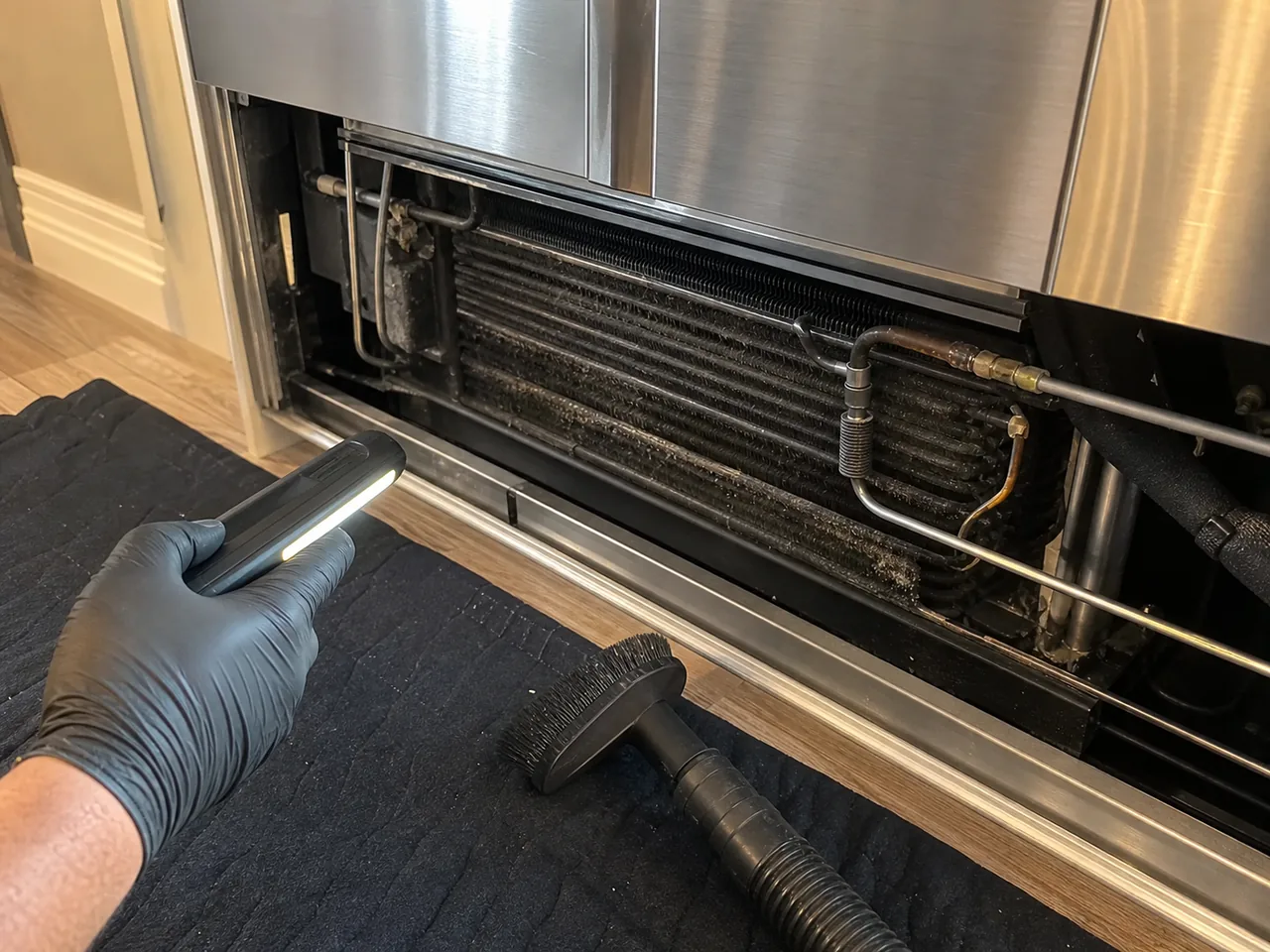
Danville's dry summers add a second problem: dust. Without the damp that mats airborne grit down, fine valley dust stays in the air and packs the condenser fins far faster than the manufacturer's once-a-year cleaning interval assumes. A coil that looks clean in spring can be furred over by August.
The two checks that matter most before the heat peaks
First, the condenser. Pull the lower grille and look — if the fins are gray with lint and dust, the unit is running hot and a vacuum-and-brush cleaning will buy back capacity immediately. In a dustier Tassajara-side or estate kitchen this is worth doing twice a year, not once.
Second, the door gaskets. Heat hardens an aging gasket, and a hardened gasket lets warm room air leak into the cabinet, which forces still more runtime in an already-hot kitchen. Close the door on a slip of paper at several points around the seal; if it pulls out with no drag, that section has gone stiff and is letting your cooling escape.
When to stop maintaining and call
Preventive care handles dust and gaskets. It does not fix a unit that has already lost the fight. If your Sub-Zero is cycling almost constantly through the afternoon, sweating heavily at the door frame, or letting the fresh-food side drift above 40°F on hot days, those are signs the system is straining beyond what a cleaning will recover.
That is the point to bring us in rather than wait for a total failure on the hottest weekend of the year. Our $89 diagnostic goes toward the repair, and because Danville sits on our regular 680-corridor routes, scheduling is usually quick. Call (925) 940-3576 or book online.
· FAQ
Questions & answers
How often should I clean my Sub-Zero condenser in Danville?
At least twice a year here, not the usual once. Danville's dry, dusty summers pack the coil faster than the standard interval assumes, and a clogged coil is the single most common reason a local unit runs hot.
My kitchen is hot in summer — is that bad for the fridge?
It makes the compressor work harder, yes. A built-in dumps its heat into the room, so a warm kitchen narrows the gap it needs to cool against. Good ventilation around the unit and a clean condenser offset most of it.
Does the heat shorten how long a Sub-Zero lasts?
Only if it is neglected. These units are built to run fifteen to twenty years even in a warm climate. The damage comes from a packed coil and a leaky gasket forcing constant runtime, both of which routine care prevents.
Go deeper
More Danville guides
Why Does My Freezer Keep Icing Up at the Bottom? How the Drain, Seal and Defrost Cycle Work
Ice on the freezer floor means meltwater or humid air is getting in. The 3 usual causes in a Sub-Zero freezer, safe owner checks and when to call a technician.
Read the guide → Noise guide · 7 minFridge Freezer Making Noise? Which Sounds Are Normal and Which Mean a Fault
Fridge freezer making noise? Learn which hums, clicks and pops are normal on a Sub-Zero built-in and which grinding, buzzing or clicking sounds mean a fault.
Read the guide → Choosing a repair service · 7 minHow to Choose a Sub-Zero Repair Service in Danville and Blackhawk
Vetting a Sub-Zero repair company in Danville: gate clearance for Blackhawk, hillside and panel-ready access, and whether one company can cover the Wolf too.
Read the guide →Rather leave it to a specialist?
Have the failing compartment and model number ready, and you will get a real first opinion — not a sales pitch.